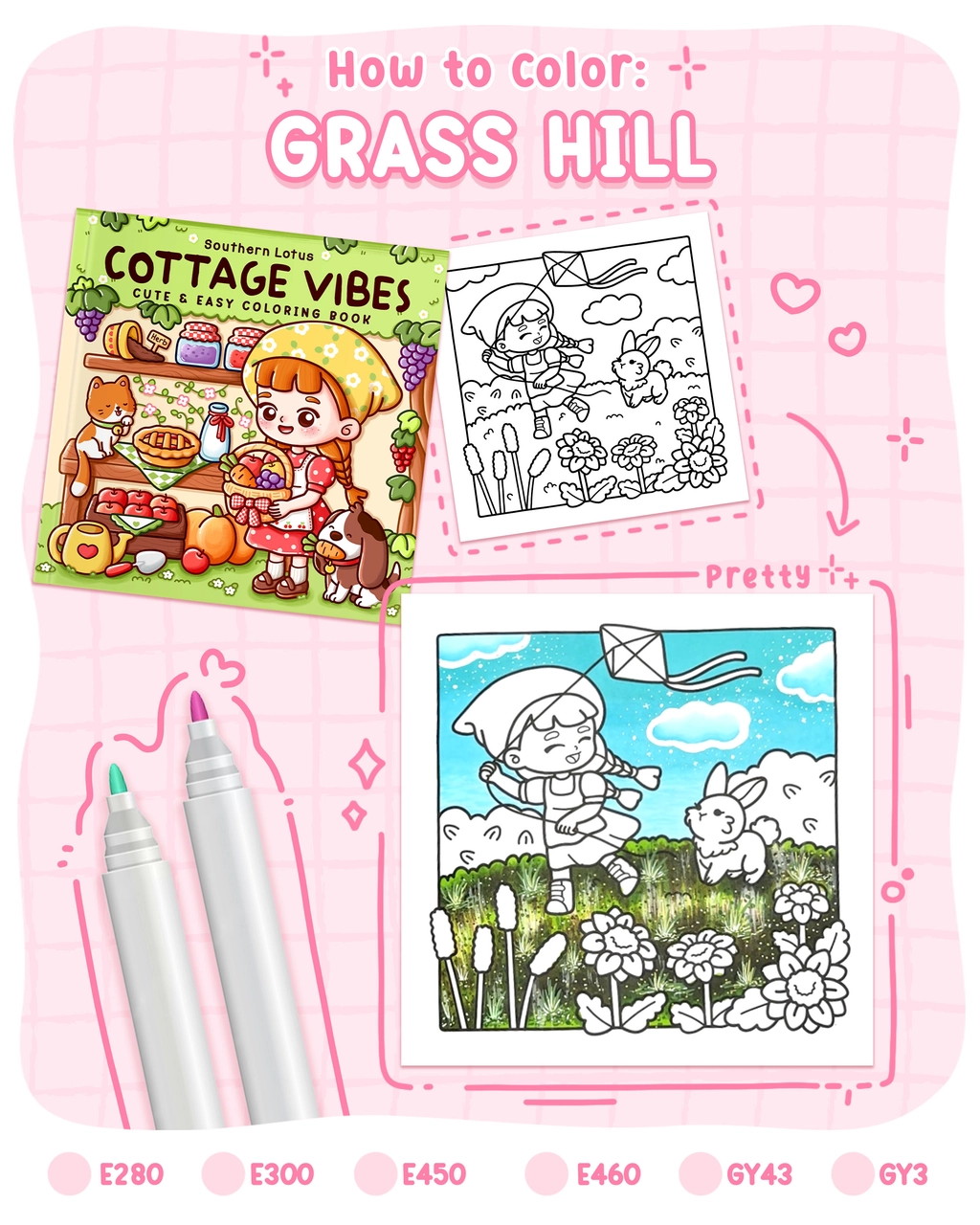
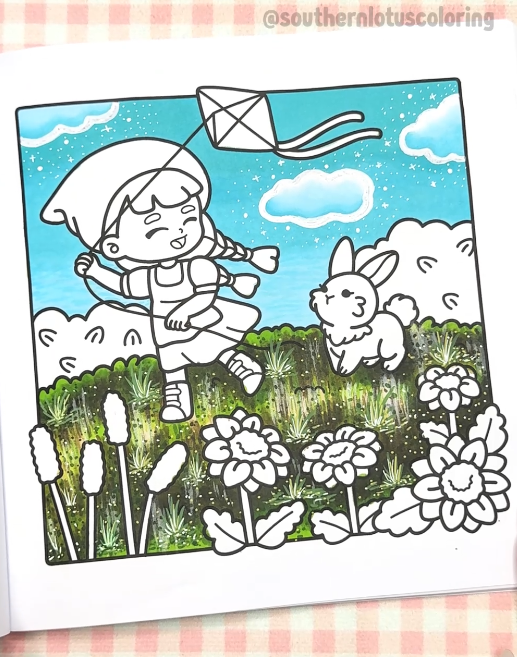
Creating a realistic grass hill in your coloring projects adds depth and vibrancy to your artwork. In this tutorial, we'll use a page from the "Cottage Vibes" coloring book by Southern Lotus Coloring Book to demonstrate effective techniques for coloring grass hills. By following these steps, you'll learn how to apply base colors, add shadows, and blend hues to achieve a natural look in your illustrations.
- "Cottage Vibes" Coloring Book by Southern Lotus Coloring Book
- Ohuhu Markers (E280, E300, E450, E460, GY43, GY3)
- White gel pen
- Green and yellow acrylic pens
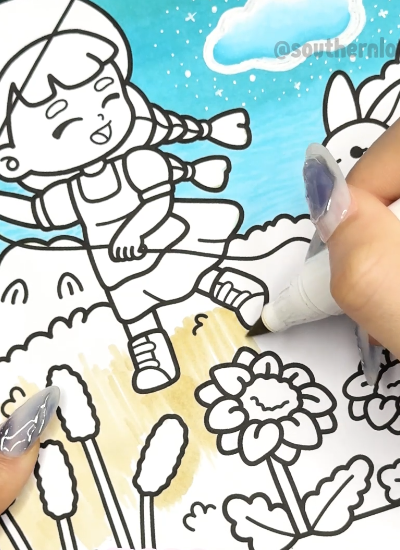
Begin by coloring the center of the hill using the E280 marker. Move your brush in vertical strokes to mimic the natural growth direction of grass. This base layer establishes the lightest area of the hill, creating a focal point for the gradient effect.
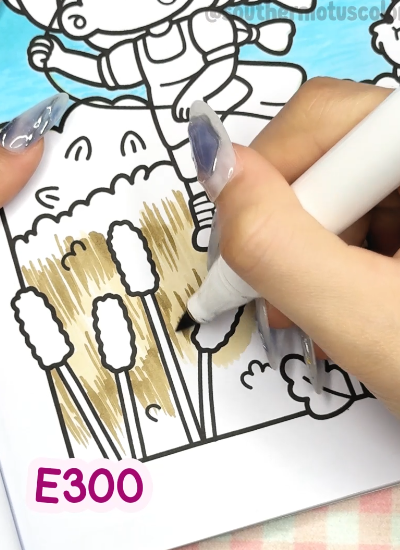
Using the E300 marker, add vertical lines on both sides of the initial layer. This step introduces a subtle transition from the lightest area to the darker regions, enhancing the three-dimensional appearance of the hill.
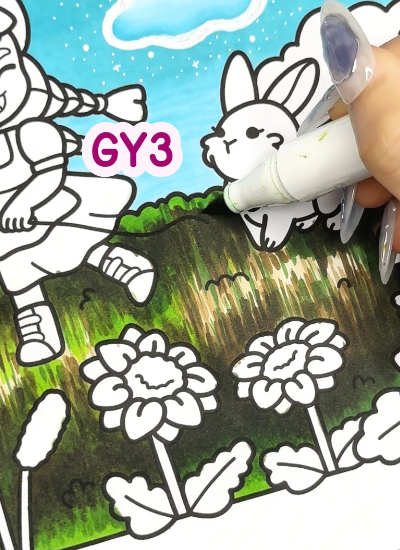
Continue the process by applying E450, E460, GY43, and GY3 markers in succession, working from the center toward the edges. Each shade should slightly overlap the previous one, creating a smooth gradient effect that transitions from light to dark. This layering technique adds depth and realism to your grass landscape.
To enhance the texture and realism of the grass, use a white gel pen to add subtle highlights to the field, focusing on the lightest areas. Gently blend the gel pen marks with your finger to achieve a natural look, simulating the effect of sunlight reflecting off the grass blades.
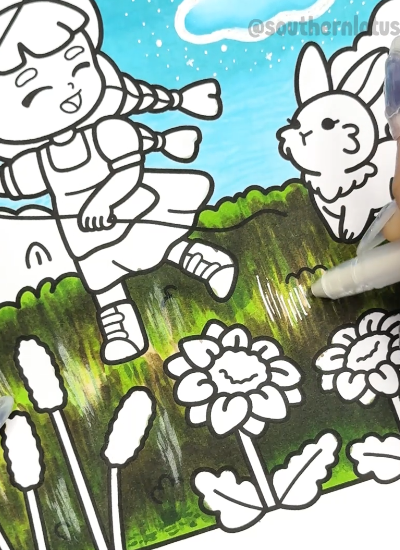
For added depth and variety, use green and yellow acrylic pens to draw taller blades of grass sporadically across the hill. This step adds dimension and interest to your illustration, making the grass appear more dynamic and lifelike.
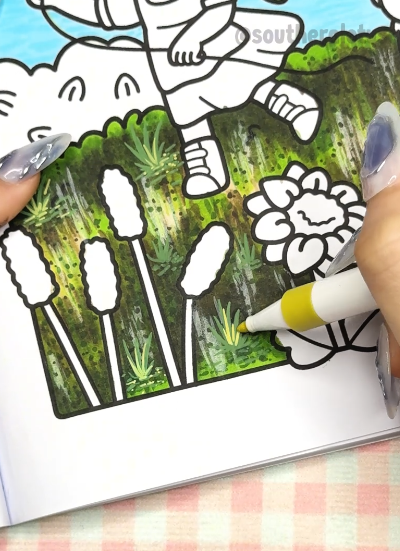
By following these steps, you've created a realistic grass hill that adds character and depth to your illustration. The combination of base coloring, gradient application, and highlighting techniques brings the grass landscape to life, enhancing the overall impact of your artwork.
If you enjoyed this tutorial and wish to further develop your coloring skills, consider exploring additional resources and guides on Instagram.