
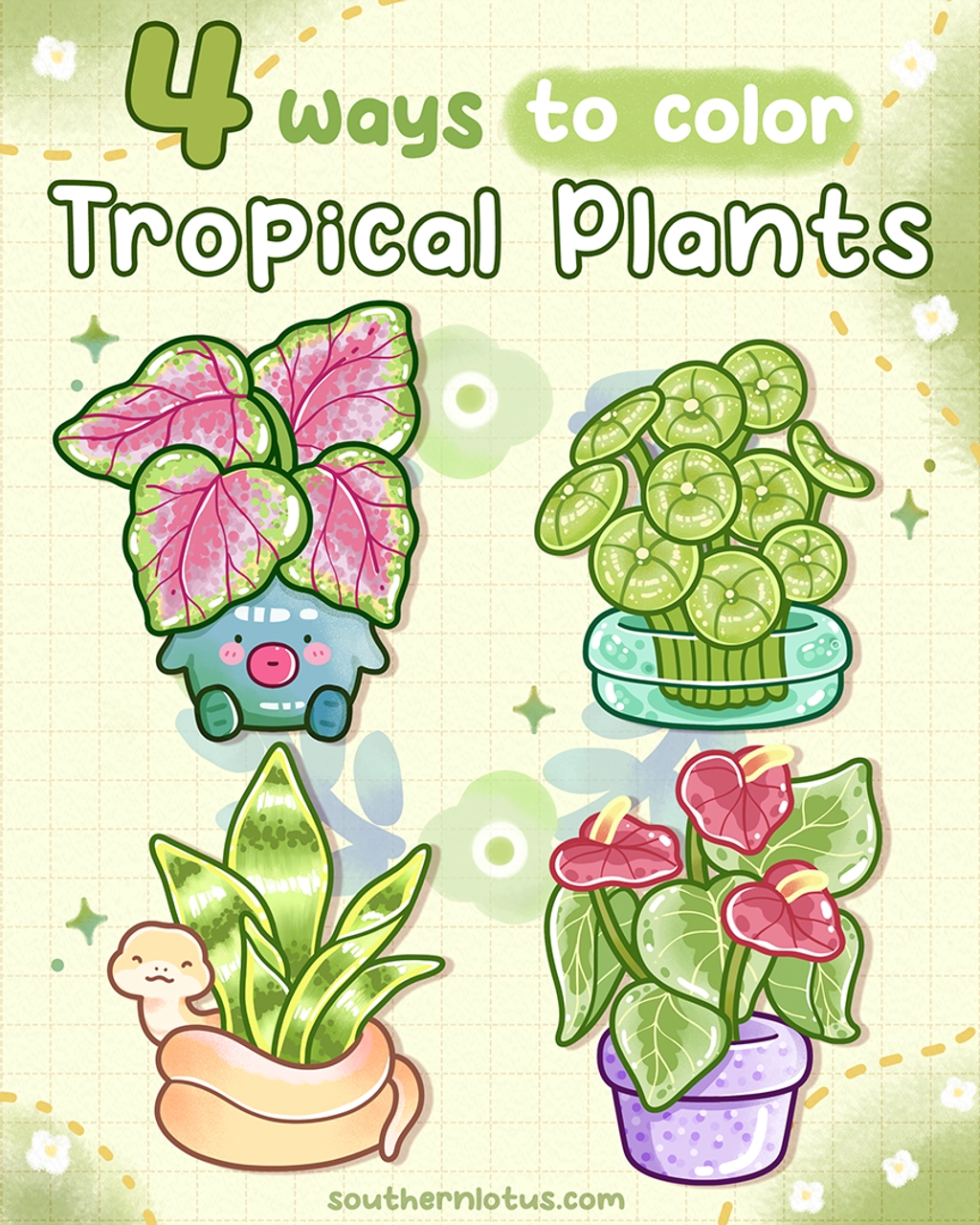
If you love cute plant coloring pages, soft tropical colors, and easy marker tutorials, this guide is a fun little source of coloring inspiration. In this Southern Lotus tutorial, we are sharing 4 beautiful ways to color tropical plants using alcohol markers, acrylic pens, and gel pens. Each plant has its own mood, color story, and texture, so you can explore different coloring techniques while keeping everything simple, relaxing, and beginner friendly.
This tropical plant coloring guide features four lovely plant styles: Anthurium, Caladium, Pilea, and Snake Plant. From soft pastel leaves to bright glossy highlights, each page shows how to build color step by step and turn a simple line art page into a cozy finished piece full of life.
If you are coloring with Ohuhu alcohol markers or similar marker sets, these types of pages are especially fun because the broad leaf shapes blend beautifully. Adding acrylic pen details on top can make the finished plants look glossy, fresh, and full of dimension.
The Anthurium is a lovely choice if you want to mix soft green leaves with warm pink flowers. This page uses a gentle pastel base first, then slowly builds contrast with darker tones, leaf veins, and bright highlights. The final result feels fresh, polished, and slightly glossy.
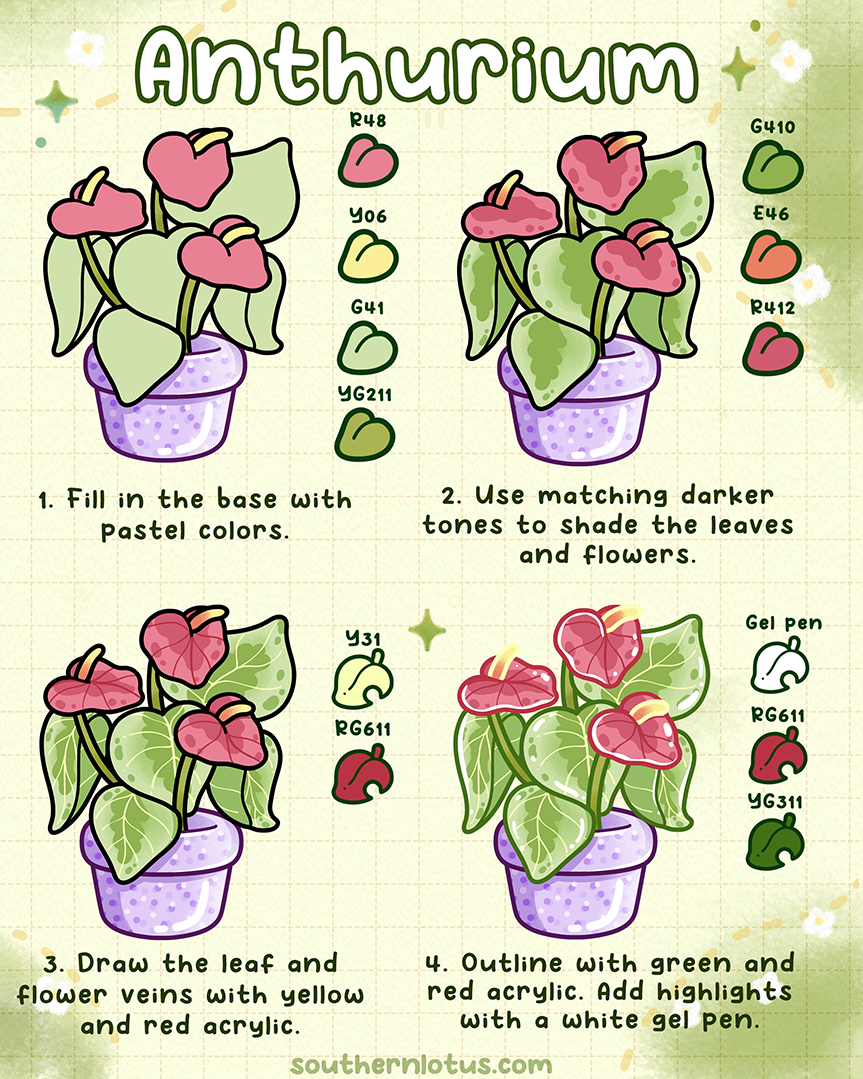
Start by filling the base with pastel colors. Next, use matching darker tones to shade the leaves and flowers. Then draw the leaf and flower veins with yellow and red acrylic pens. To finish, outline with green and red acrylic and add highlights with a white gel pen. This method helps the Anthurium look soft, bright, and decorative without feeling too complicated.
Caladium leaves are perfect if you enjoy playful dot textures and dreamy pink and green combinations. This style looks detailed, but the process is actually very easy to follow. The secret is to build the color gradually from the edges and center, then add dotted layers for extra softness and charm.
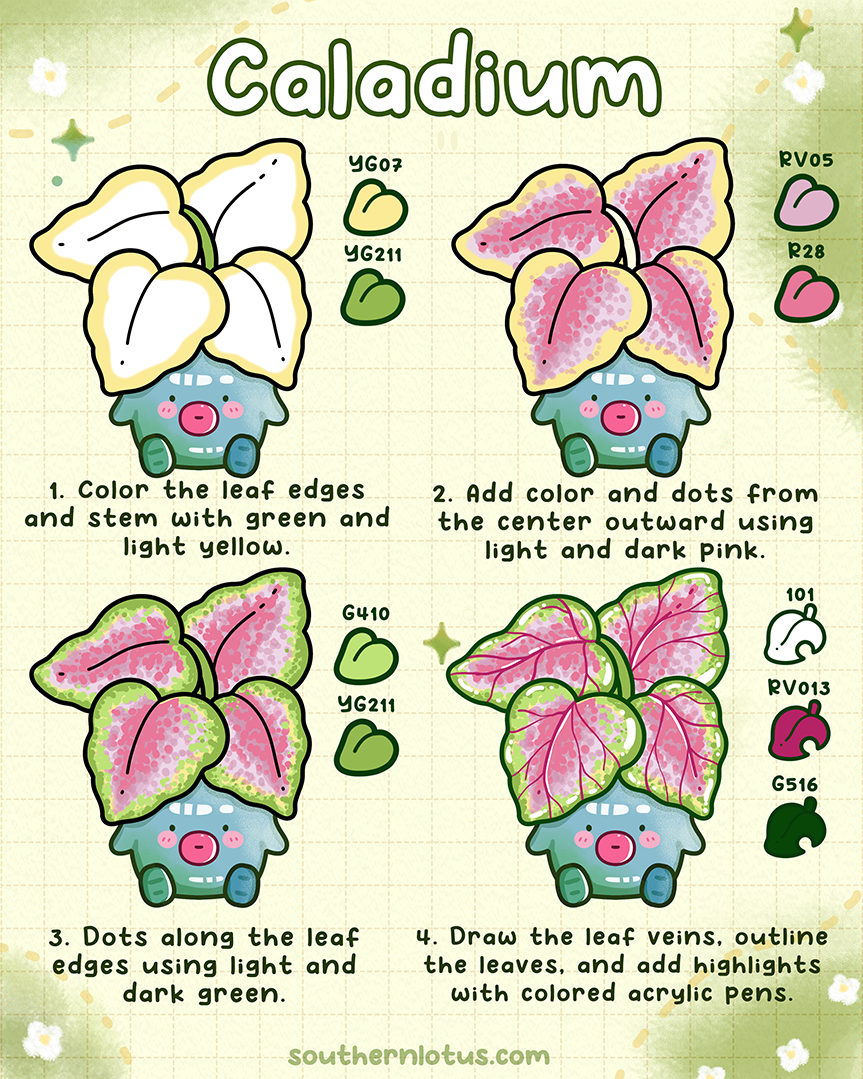
Begin by coloring the leaf edges and stem with green and light yellow. After that, add color and dots from the center outward using light and dark pink. Continue building depth with dotted accents along the leaf edges using light and dark green. Finish the page by drawing the leaf veins, outlining the leaves, and adding highlights with colored acrylic pens. This creates a sweet, glowy tropical plant look with lots of texture.
Pilea leaves have a round, cute shape that makes them ideal for simple shading and repeating patterns. This page is a great choice for beginners because the structure is easy, but the finished result still looks rich and detailed once you add veins and highlights.
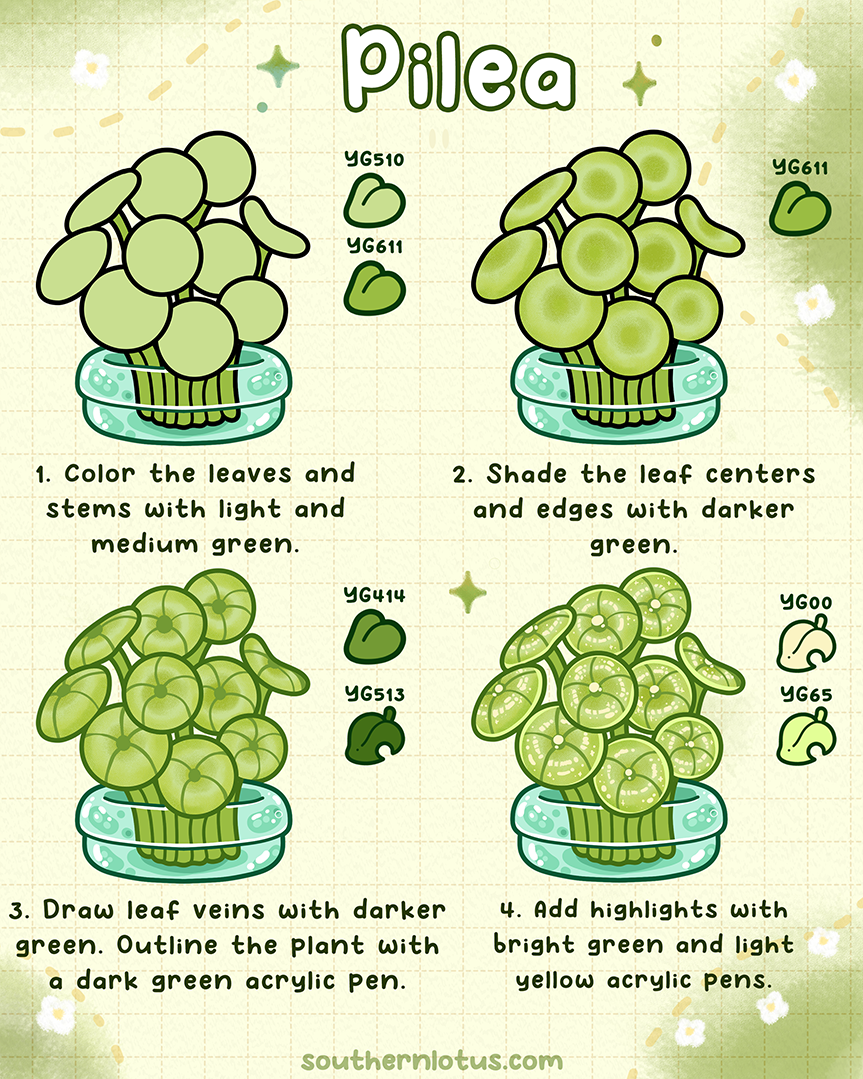
Color the leaves and stems with light and medium green first. Then shade the leaf centers and edges with darker green to create soft volume. Draw leaf veins with darker green and outline the plant with a dark green acrylic pen. Finally, add highlights with bright green and light yellow acrylic pens. These small details help the Pilea look lively, glossy, and full of character.
The Snake Plant is one of the easiest tropical plant pages to color, but it can still look very striking. Because the leaves are long and clean, this page works beautifully for smooth blending, soft shadows, and small textured dots. It is a perfect option if you like minimalist plant illustrations with a cozy twist.
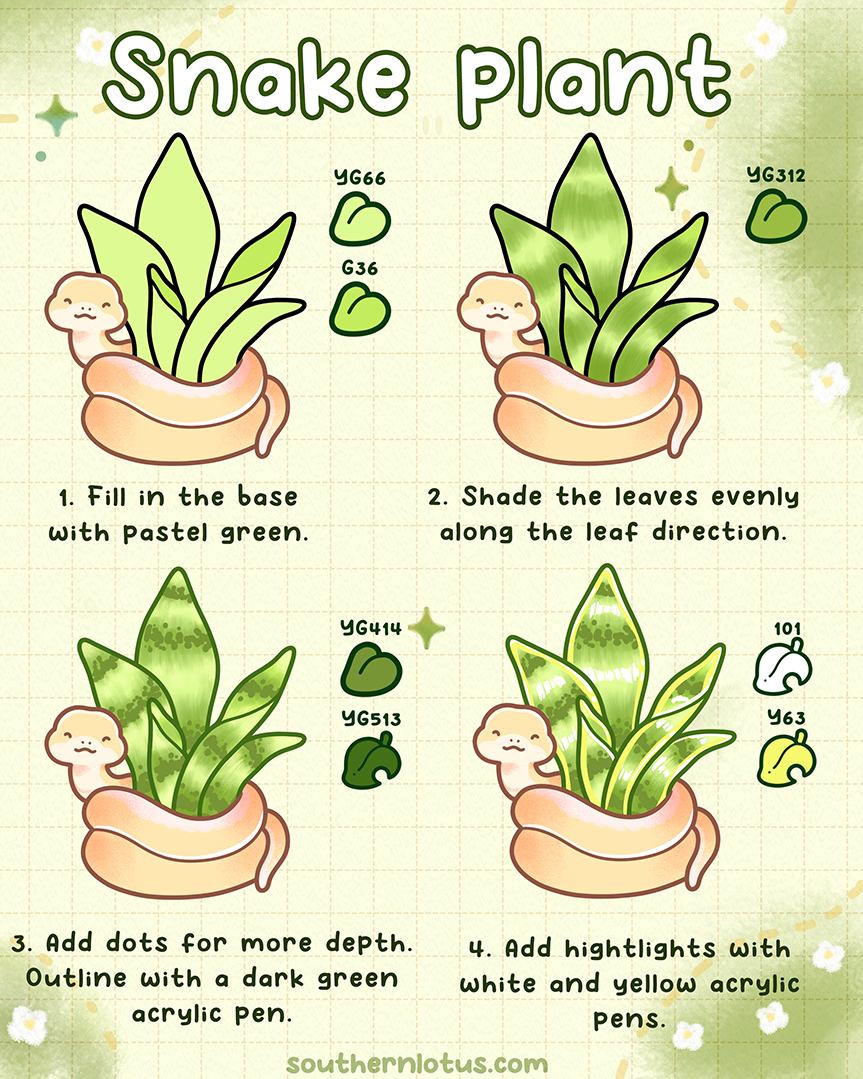
Fill in the base with pastel green, then shade the leaves evenly along the leaf direction. Add dots for more depth and outline with a dark green acrylic pen. To finish, add highlights with white and yellow acrylic pens. This keeps the plant looking clean, fresh, and bright while still giving the leaves enough texture to stand out.
These tropical plant coloring pages work especially well with alcohol markers because they help you blend smooth layers quickly and keep the colors soft and clean. Acrylic pens are perfect for outlines, veins, and decorative highlights, while a white gel pen can add tiny finishing touches that make the leaves look shiny and dimensional.
If you are just starting out, do not worry about copying every exact shade. The beauty of plant coloring pages is that you can easily change the palette and still get a lovely result. Try pastel greens, warm pinks, fresh lime tones, or even deeper moody colors for a totally different tropical vibe.
Want to try these cute tropical plant coloring pages yourself? Explore and download the free printable coloring pages to enjoy a relaxing coloring session at home. These pages are perfect for adults, teens, and kids who love cozy coloring, botanical themes, and easy marker-friendly illustrations.
We hope this tropical plant coloring tutorial gives you new ideas for your next cozy coloring session. Whether you love soft Caladium leaves, shiny Anthurium flowers, playful Pilea circles, or the simple beauty of a Snake Plant, these pages are a lovely way to relax and enjoy color.
Enter your email to get our special. Gift straight to your inbox.